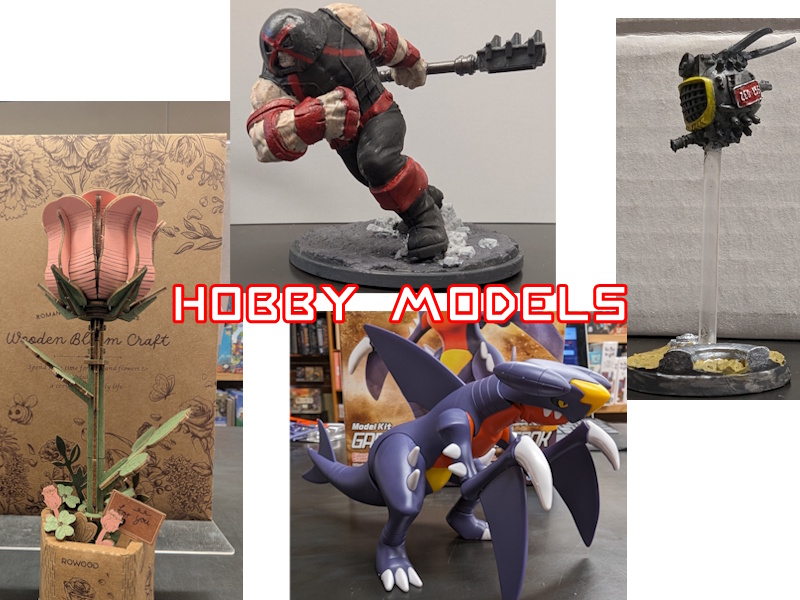
Hobby Models
review by Alapai
As in previous years, my Staff Review for December isn’t about a specific item, but about a genre. This year, I’ve reviewed various items for assembling and painting as part of the hobby of models. And here, I’ll go over what you can do if you’re looking to get into the hobby as well!
First off, there are two different aspects to models that I encountered that I alluded to earlier. The first is assembly, where you take a kit and assemble the various pieces together to create the model in question. The second aspect is painting, where you take an unpainted model and paint it how you would like it to look. Some of the models I encountered this year were only the first aspect, some only the second, but the majority of what we have at the store is going to be both, where you first assemble a model, then paint it. I’ll be going over each of these three types, assemble-only, paint-only and both, in that order.
Assembly Only
If you’re looking to only assemble a model, there are various options to choose from. While different companies will have different styles of sprue and assembly method, with some being simpler or more complex than others even with the same material, I’d say that material is going to be the main determining factor when picking a model to assemble. The ones I’ve assembled from Gamescape have been plastic, wooden, metal and paper and in terms of what I recommend, it would be in that order.
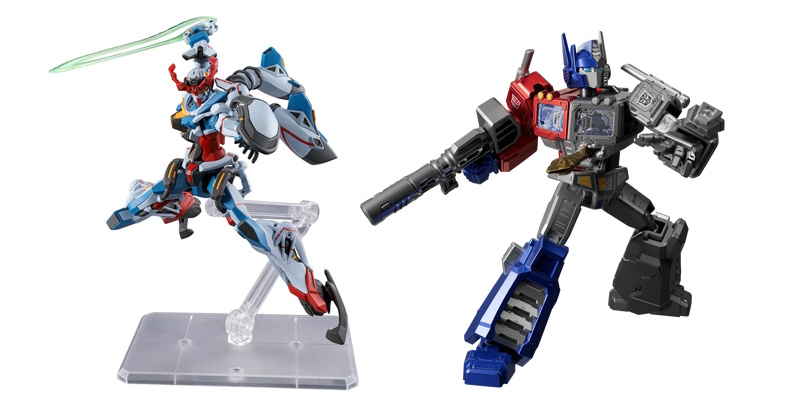
Plastic model kits, like Bandai’s Gunpla or Blokees’ Transfomers kits, are going to generally give you the best assembly experience and, in my opinion, the best overall product after you are done. There are kits for all levels of builder, from some of the very basic PokePla Quick kits with ~20 total pieces from two sprues up to the multi-hundred dollar Perfect Grade Unleashed Gunpla at 1/60 scale with lights and almost triple digit points of articulation. While the kits can vary in complexity, generally they are made by removing pieces from sprues and fitting parts into slots so that they click and lock into place.
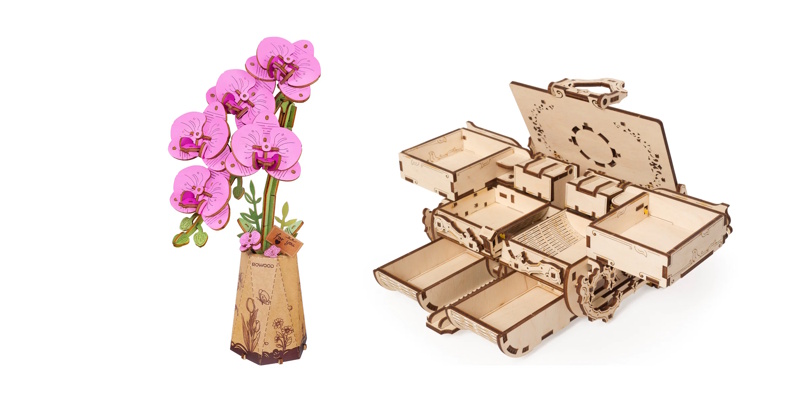
Wooden kits are my next favorite, like the Wooden Bloom Flower kits or the Ugears model kits. As with the plastic kits, the general way they work is by removing pieces from sprues and fitting them into slots, but the main difference is, of course, the material they are made of. The wood that these kits are made of is soft enough that enough force will break them, so you need to be more careful than you would be with plastic kits. Both getting them off of the sprue and fitting them together requires some care, but also enough force to make sure they either disconnect from the sprue or slide all the way together. Some of the fancier Ugears kits will also require lubricating part of it so that it can move smoothly or even cutting rubber bands up so that you can have tension or be a rubber stop for the model standing up.
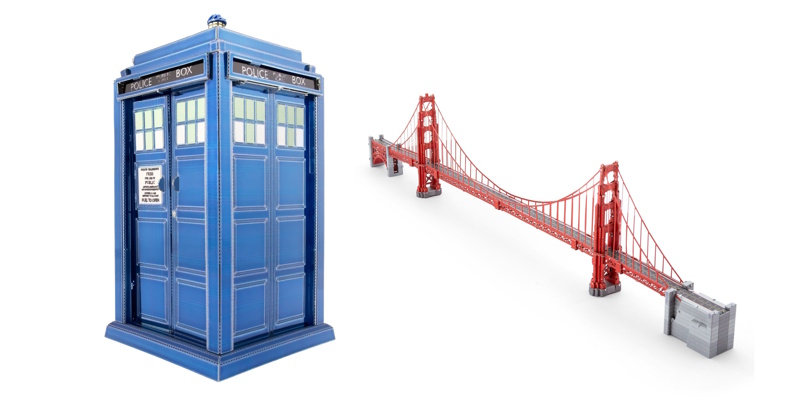
Metal Earth kits are made entirely of flat metal sheets and require some tools to put them together. While the simpler plastic kits don’t need any tools and the wooden ones generally don’t require any tools, Metal Earth models require clippers to remove the pieces from the sprues and pliers to bend the tabs after they are through the slots. With Metal Earth models, the way they work is by taking the tabs from pieces, putting them into slots, then bending or twisting the tab, depending on the connection (the instructions will specify which to do). My biggest issue with these is that these can be tricky as well as fragile. Various models will require you to curve the metal sheets into rounded shapes, like the TIE Fighter, and that requires getting them into the exact shape, curving a flat piece of metal into a ball of exact proportions. If it’s not perfect, then things won’t necessarily fit together properly and you have to stress it more to fit, which might break it. They’re still something I enjoy putting together for a chrome (or color in the more recent ones) display, but they are also static unlike a lot of the plastic or wooden kits.
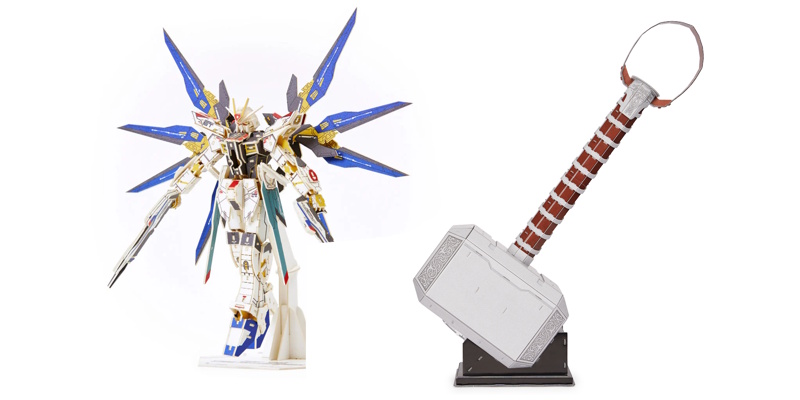
Papercraft kits, like si-gu-mi’s Gundam kits or 4D Brands’ Paper Model kits are paper based model kits. They are thicker than Metal Earth, as they are thick-cut paper that are essentially a sturdy cardstock. Well, I say sturdy, but that’s just in comparison to paper. They are still very fragile and the connection points are the most problematic. Like the Metal Earth kits, they mostly stay together by sticking tabs into slots, but they are designed so that the tab will stick in the slot with friction to keep it in place. For the most part, I enjoy assembling them, but like with Metal Earth kits, any small problem can be the end of the entire model. As the tabs are essentially the same size as the slots so that friction holds them together, if the tab deforms at all, like being squished down, then the slot is no longer as efficient. And a lot of the models have a bunch of pieces that are just one small thing attached by a single tab, so if that gets messed up, that piece is done. And if you are trying to get a tab into a slot and pushing it hard enough that something else gets pushed out, then hopefully, it can go back together, because otherwise, the entire model might not be able to stick together.
Paint Only
If you’re looking to only paint a model, the variations you should keep in mind are fewer than the models only for assembly. There are not many items that we have that are designed only for painting and what we do have is generally going to require some assembly. The minis for RPGs are generally going to be the items we have although they do often have a small amount of assembly even if it’s just attaching them to a base. But there are still a lot of different options available as the other thing that you will be looking for are games that come with unpainted preassembled minis (like Unmatched or Gloomhaven) and there are a lot of games that come with minis. The main things you need to keep in mind when selecting unpainted, preassembled models are the size of the models in the game and how much effort you need to go through to get them to ready to paint.
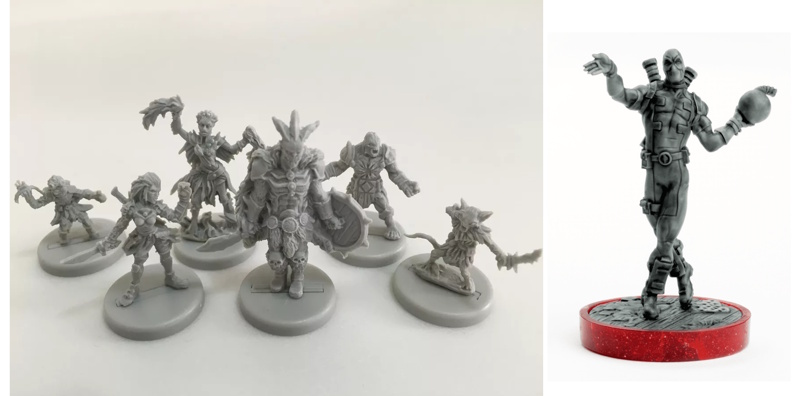
Size of the model you are painting is important as larger models will give you more leeway in your painting. For example, in Horizon Zero Dawn: The Board Game, the minis are pretty small and have a decent amount of detail so they are going to be more difficult to make look good than a game like Marvel United whose minis are larger and simpler. I’d say that if you don’t already paint minis, looking for larger, simpler minis is a good first step so you can establish a base line for how comfortable you are at painting. Looking up images of board games on BoardGameGeek can help you to determine the size of the minis in a game and whether you want to buy it to paint.
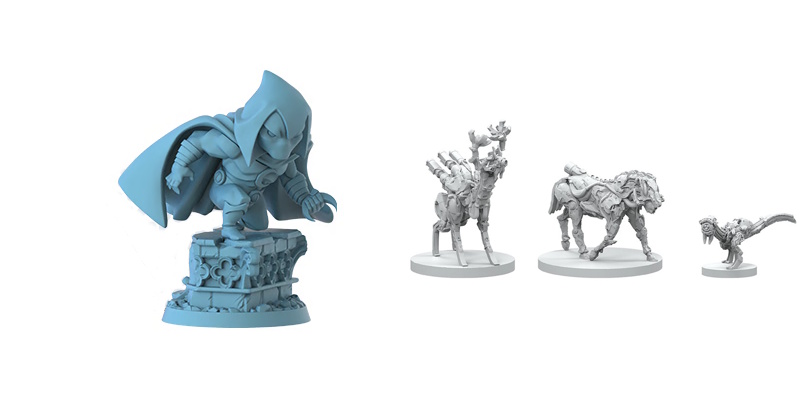
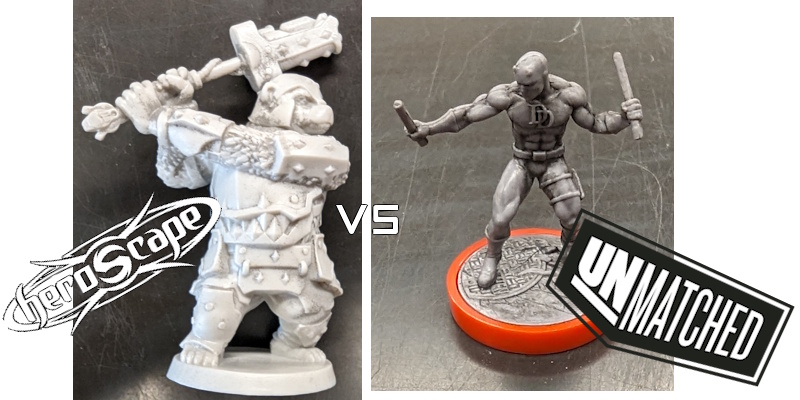
How much effort to get a model ready to paint is the other main consideration to keep in mind. While the RPG minis are often ready to go right out of the packaging, other minis might require an extra amount of effort. Going back to Unmatched, those minis are designed to be played and look decent right out of the box. That means they come with a wash on them already that gives them a small amount of depth. You can prime them right over the wash, but if you want the most detail available, you might want to try and remove the wash with a paint remover. Other minis might be made out of a material like metal or resin that will often have had a mold release agent applied to get them out of the mold they were formed in and that agent makes it more difficult to apply paint, so you want to wash the model with soap first in order to get primers to stick.
Assemble and Paint
For both assembling and painting models, you’re mostly going to be looking at miniatures from miniature wargames like Warhammer 40K. The considerations from just painting models still apply in that the size is very important and the prep effort now also includes assembly.
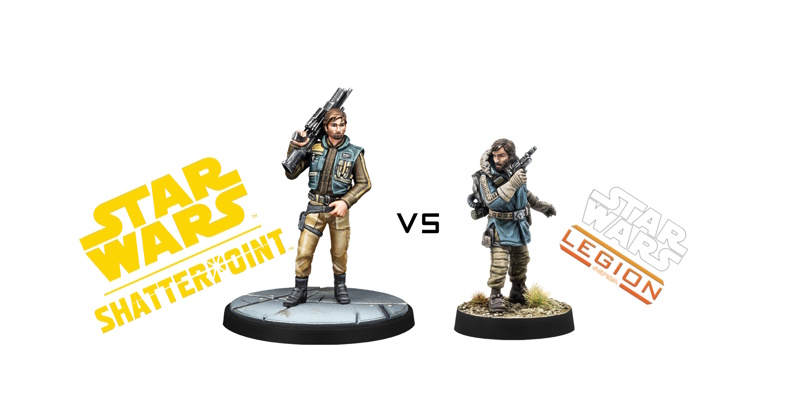
A lot of minis games will be at a similar scale, but they will vary depending on how the game plays. For example, Star Wars Legion has smaller minis than Star Wars Shatterpoint as Legion is designed as a game where you assemble large armies to fight your opponent while Shatterpoint is designed as a smaller skirmish game between just a few minis per side. As such, if you’re looking to assemble Cassian Andor and K-2SO, the Star Wars Legion box with them will get you smaller minis (and smaller bases) than the Shatterpoint minis. And aside from minis games, there are also busts and statuettes from companies like Neko Galaxy that are on a much larger scale.
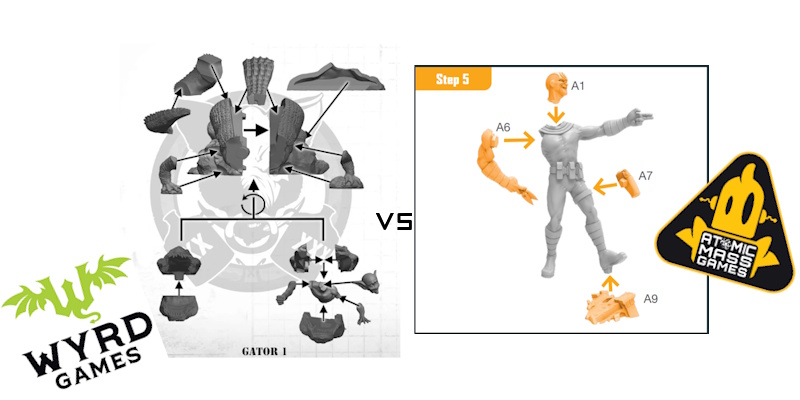
Assembly for any given mini will of course vary, but for the most part, you can separate them by the company that makes them. Monster Fight Club, for instance, has a lot of minis that come mostly assembled, but there are also a few that require a small amount of assembly. They also require drilling one or more holes in the base to properly attach the pegs to the base. Atomic Mass Games minis are some of my favorites as their assembly can often be done without accessing the instruction sheet on their website, as they often consist of easily recognizable torso, head, arms and legs with occasional other details that are relatively easy to put together. Games Workshop has minis that generally require more effort to assemble and come with detailed instruction sheets. And then Wyrd’s minis are infamously complicated to assemble.
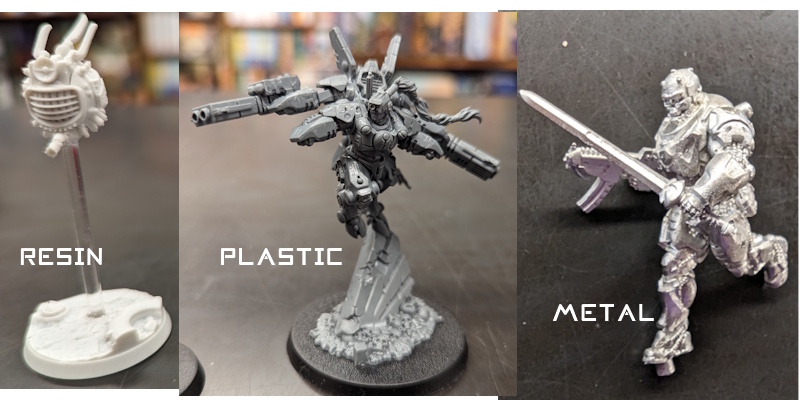
The material that any given company’s minis are made of can be important to determining if you want to get their minis as well. Mostly, minis these days are made out of plastic that can be assembled with plastic glue that melts plastic together. But there are also other materials that they are made of as well. Monster Fight Club’s minis, for instance, are made of a different plastic that cannot be glued together with plastic glue and so require super glue. Some of Corvus Belli’s minis are still metal and require not just super glue instead of plastic glue, but also a different set of clippers for cutting through metal instead of plastic and to scrub the minis to make them more amenable to glue and primer. Modiphius has some resin minis that, like metal minis, require scrubbing them and assembling with super glue instead of plastic glue.
Hobby Supplies
The models themselves are one thing, but you’ll need other materials depending on what you are attempting to do. I’ll briefly cover what things you might need and how to try and choose them. This is not a comprehensive list and there are a lot of other tools you can use.
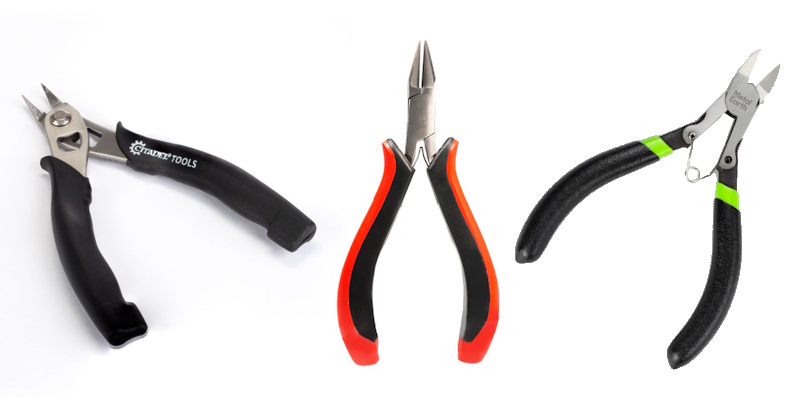
One thing that is very useful is clippers. They can go by other names as well, like nippers or cutters, but they all function very similarly. Clippers are built very similarly to scissors, where there are two metal pieces that are connected on a point and you bring together the handles to bring the sharp parts together to cut. The sharp parts are much smaller though and designed to cut through small connections on sprues in order to remove the parts from the runner. Most models do come on a sprue and need to have their parts removed, so clippers are very useful for that purpose. When purchasing one, you should make sure that the clippers you are purchasing are appropriate for the sprue. Mostly, there are a lot of clippers designed for plastic that you should not use on metal as they are not designed to cut through metal.
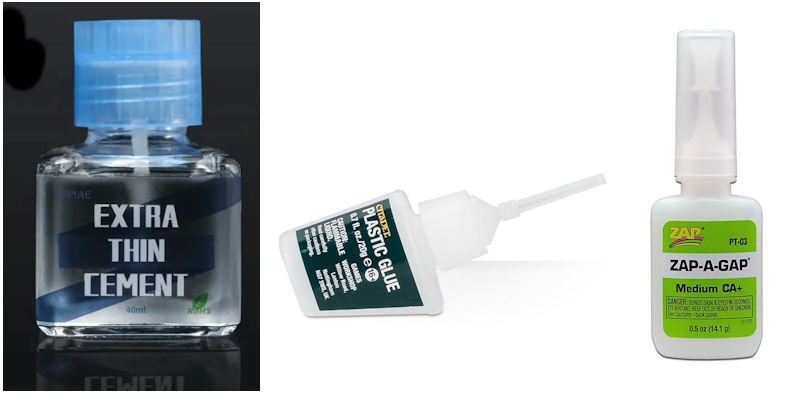
Most stand-alone models that we have will not use glue, but the miniatures for gaming often will. The two glues that are most commonly used are super glue and plastic glue although they can go by other names as well. The main difference between the two is that super glue is designed so that when placed on a surface and something else is also placed there, the two glue will stick to both and keep them together while plastic glue works by melting plastic lightly so that when it dries, the plastic will melt together. For plastic minis that plastic glue works on, I do recommend plastic glue as it does form a very strong bond when it hardens. For resin or metal or even some plastics, you will need super glue. If you will be using various materials, just a super glue might be the best solution as super glue still works, but if you are working just with plastics, plastic glue is the way to go.
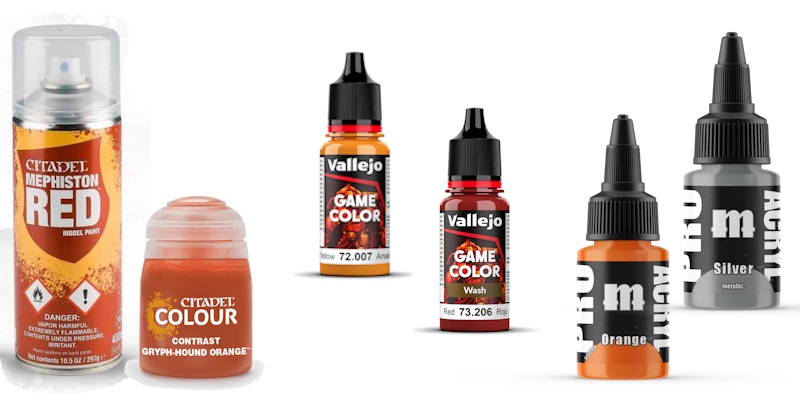
As far as painting goes, it is a much larger experience with way more than I can mention here in a brief summary, but I’ll give the basics. Most minis will require a primer in order to make the paint stick to the mini properly. What is recommended most is spray primers that will coat things evenly and efficiently, but depending on your situation, a paint-on primer might be better if you are unable to safely spray minis with proper space and ventilation. There are various different brands of paint that we have, but I’d say the main difference of what we have comes down to Citadel’s pots and the other brands’ bottles. Citadel has pots that you open the lid and dip your brush into while the others feature dropper bottles where you put some drops onto a palette and then get the paint onto your brush from the palette. I’d say that Citadel’s pots are definitely the simplest as you don’t need a separate palette, but other brands make it a lot easier to mix paints together. I started with Citadel and have been getting more from other brands as my collection of paints grows. Each brand will have its own main line of paints. From Citadel, you will want Base Paints and potentially Layer Paints which are thinner. From Vallejo, you’ll want their generic Game Color paints. From Monument Hobbies, you’ll want their non-Transparent generic Pro Acryl paints. Beyond those are paints for more specialty purposes. Metallics provide a shiny, metal-like color on your minis. Washes can be used to help shade minis, being a very liquidy, transparent color designed to lightly cover minis. Fluoresecent colors are used to help provide lighting effects on minis. Inks can be used to enhance other paints. Effects paints allow you to recreate certain textures, like rust or blood easily. An alternate to paints and washes can also be found in Citadel’s Contrast paints, Vallejo’s XPress Colors and Army Painter’s Speedpaints. Each of those are designed to go over a white and both provide a color like a regular paint and seep into cracks like a wash, providing depth with just one paint.
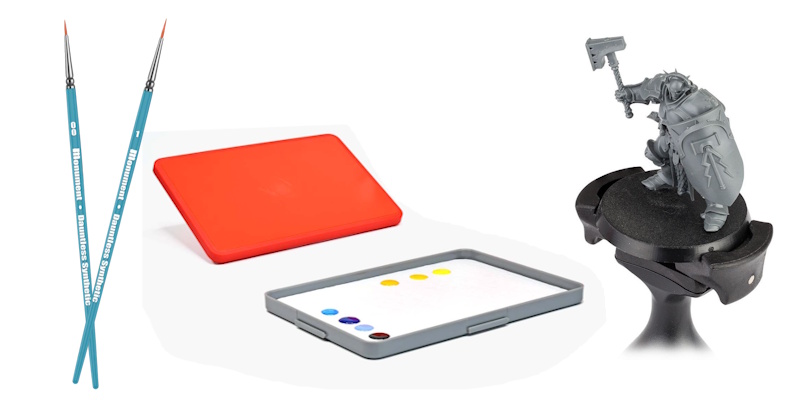
Other materials for painting I recommend looking into are brushes, palettes, handles. Brushes are of course very important. I recommend starting with getting a larger and smaller one where you can cover more of the mini with the larger brush and get into the details with the smaller one. While you can get very expensive brushes and go real deep into what brushes you can get, some simple synthetic brushes can go a long way when you’re starting out. Palettes will hold your paint as you go. There are dry palettes which are generally a glass or plastic that are very easy to clean after the paint dries. There are also wet palettes which feature a sponge and membrane so that paint on them will not dry out as you use it. Painting handles are very useful for holding your mini as you paint it. Instead of having to try and hold the mini at weird angles as you paint it, potentially having to touch the drying paint, you can attach the mini to a handle and just wield the handle to paint your mini.
Conclusion
Ultimately, the final decision as to what model to get should be unique to every individual. Are you looking just to build something and not to paint? Just looking to paint and not assemble a figure? Looking to do both? While I can give my personal favorite options for each, ultimately, it will come down to what you want. For assembly, I personally enjoyed assembling a Master Grade Gunpla earlier this year and, while simpler, I really like the Garchomp PokePla as I got a Garchomp out of it. For painting, I’ve enjoyed the Unmatched Marvel figures I’ve painted a lot. And for both, I’ve really liked the Shatterpoint boxes I’ve had the opportunity to paint and assemble. But I also really enjoyed assembling a wooden flower model and a bunch of T’au mech suits. But if you’re looking for a painting experience with more leeway, you might look more into a Neko Galaxy bust. Or if you want to get real fiddly, you might want to get a Metal Earth kit with a lot of fitting tabs into slots before bending or twisting them. There are tons of options, but here is a summary of my basic points:
Just Assemble:
Plastic - Simplest to assemble with taking components off of sprues and fitting them together
Wooden - Slightly trickier as they are slightly more fragile, but very similar to plastic
Metal - Even trickier and more fragile with more tools required
Paper - Trickiest and most fragile, but do not require extra items
Just Paint:
Size - The smaller the model, the more precision required
Effort - Some models require extra effort to get them paint-ready
Both:
Size - Like with painting, the smaller the model, the more precision needed
Assembly - Different companies can have very different assemblies
Material - Different materials require different methods
Tools:
Vary with whatever you are trying to do, make sure you have the right ones for any given project
Models, miniatures and hobby supplies are available now from our webstore.